AI-Powered Marketing Automation: Boost Leads by 35% in 6 Months
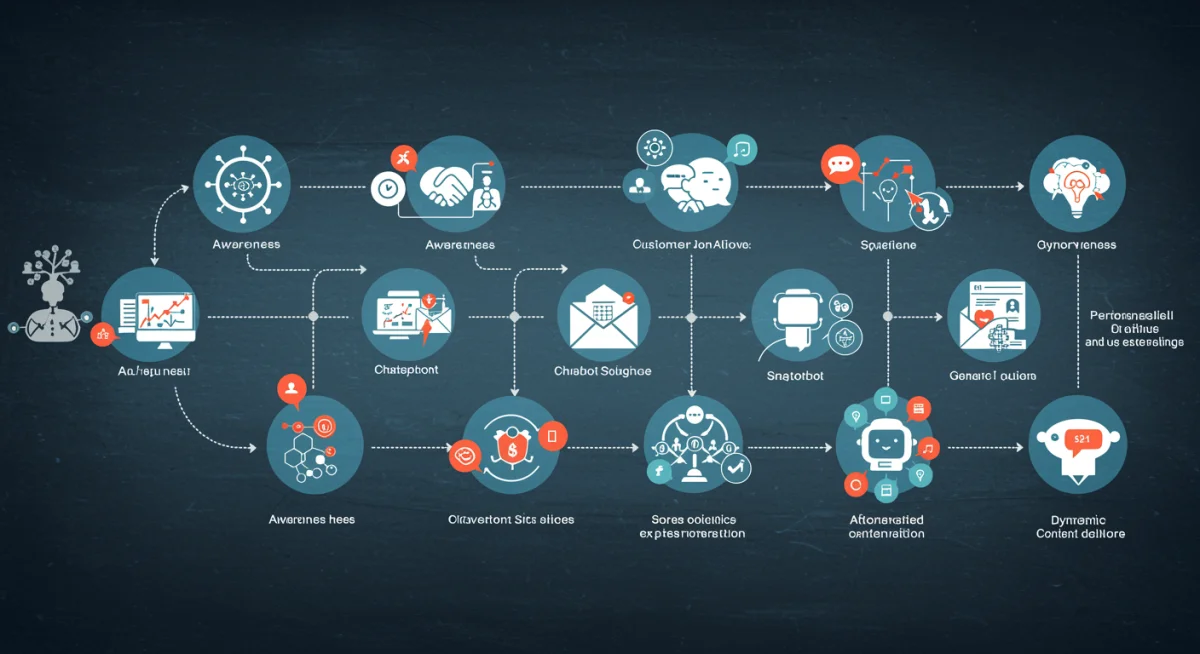
AI-powered marketing automation leverages artificial intelligence to streamline and optimize marketing processes, directly leading to a significant increase in lead generation and overall business efficiency by automating tasks, personalizing customer journeys, and providing data-driven insights.
By: adminwp2 on April 17, 2026
Advertisements
AI-powered marketing automation leverages artificial intelligence to streamline and optimize marketing processes, directly leading to a significant increase in lead generation and overall business efficiency by automating tasks, personalizing customer journeys, and providing data-driven insights.
Are you looking to revolutionize your lead generation efforts and see tangible results? AI-Powered Marketing Automation: Increase Lead Generation by 35% in 6 Months is not just a lofty goal, but a proven strategy for businesses ready to embrace the future. In today’s competitive landscape, merely having a good product or service isn’t enough; you need intelligent systems working tirelessly to attract, nurture, and convert prospects. This article will explore how integrating artificial intelligence into your marketing automation can unlock unprecedented growth, driving efficiency and delivering a significant boost to your bottom line within a surprisingly short timeframe.
Understanding AI-Powered Marketing Automation
Artificial Intelligence (AI) has moved beyond science fiction and into the core of modern business operations, particularly in marketing. AI-powered marketing automation combines the strengths of both, creating a synergy that can dramatically enhance lead generation. It involves using AI technologies to automate, optimize, and personalize marketing tasks that traditionally require human intervention, but at a scale and speed impossible for humans alone.
This isn’t just about scheduling emails; it’s about intelligent systems that can analyze vast amounts of data, understand customer behavior patterns, predict future actions, and then execute highly targeted campaigns. The goal is to deliver the right message to the right person at the right time, fostering engagement and guiding prospects seamlessly through the sales funnel.
The Core Components of AI in Marketing
AI in marketing automation encompasses several key technological components:
Machine Learning: Algorithms that learn from data to identify patterns and make predictions without explicit programming.
Natural Language Processing (NLP): Enables AI to understand, interpret, and generate human language, powering chatbots and content creation.
Predictive Analytics: Uses historical data to forecast future trends, helping marketers anticipate customer needs.
Computer Vision: Allows AI to interpret and understand visual information, useful for ad optimization and content analysis.
By integrating these components, businesses can move from reactive marketing to proactive, predictive strategies. This means identifying high-potential leads earlier, personalizing communications more effectively, and optimizing ad spend for maximum ROI. The result is a more efficient and effective marketing machine that consistently delivers better results, making the target of a 35% increase in lead generation within six months a realistic and achievable objective.
Strategic Implementation for Lead Generation Growth
Achieving a 35% increase in lead generation within six months through AI-powered marketing automation isn’t about haphazardly adopting new tools. It requires a well-defined strategy, careful planning, and a clear understanding of how AI can optimize each stage of your lead generation funnel. The strategic implementation phase is critical, laying the groundwork for consistent, measurable success.
The first step involves a comprehensive audit of your current lead generation processes. Identify bottlenecks, areas of inefficiency, and opportunities for personalization that are currently being missed. This diagnostic phase will inform where AI can have the most significant impact, ensuring that your investment in automation yields the desired returns.
Key Steps for Strategic Deployment
Define Clear Objectives: Beyond just ‘more leads,’ specify the types of leads, target demographics, and conversion goals.
Data Integration and Hygiene: Ensure all your customer data is centralized, clean, and accessible for AI analysis. Poor data quality will cripple any AI initiative.
Pilot Programs: Start with smaller, focused AI automation projects to test hypotheses and demonstrate early wins before scaling.
Continuous Optimization: AI models require ongoing training and adjustment based on new data and evolving market conditions.
Once the foundation is set, focus on integrating AI where it can augment human capabilities. For instance, AI can analyze website visitor behavior in real-time, identifying high-intent prospects and triggering personalized pop-ups or chat interactions. It can also segment your audience with far greater precision than manual methods, allowing for hyper-targeted email campaigns that resonate deeply with individual preferences. This strategic approach ensures that AI isn’t just a tool, but a transformative force driving your lead generation efforts.
AI’s Role in Personalizing the Customer Journey
In an age of information overload, generic marketing messages are easily ignored. Personalization is no longer a luxury; it’s a necessity for effective lead generation. AI-powered marketing automation excels at delivering hyper-personalized experiences that resonate with individual prospects, significantly boosting engagement and conversion rates. It moves beyond basic name personalization to truly understanding and anticipating customer needs and preferences.
AI systems can analyze a prospect’s entire digital footprint – their browsing history, past interactions, demographic data, and even their tone of voice in chat conversations – to construct a dynamic profile. This profile then informs every subsequent touchpoint, ensuring that content, offers, and communication styles are perfectly tailored to that individual, making them feel understood and valued.
Dynamic Content and Predictive Recommendations
One of the most powerful applications of AI in personalization is dynamic content delivery. Imagine a website where the homepage layout, product recommendations, and even the call-to-action buttons change based on who is visiting. AI makes this a reality, presenting the most relevant information to each user, increasing the likelihood of conversion.
Predictive analytics, a subset of AI, takes this a step further by anticipating what a prospect might need next. If a user has been browsing specific product categories, AI can predict their interest in related items or services and trigger automated follow-up emails with tailored suggestions or exclusive offers. This proactive approach not only enhances the customer experience but also shortens the sales cycle by addressing potential needs before the prospect even articulates them. The ability of AI to create these bespoke journeys is a game-changer for businesses aiming for aggressive lead growth.
By leveraging AI for deep personalization, businesses can build stronger relationships with prospects, fostering trust and loyalty from the very first interaction. This granular level of personalization, driven by intelligent automation, is a cornerstone of achieving and exceeding lead generation targets.
Automating Lead Nurturing and Scoring
Generating leads is only half the battle; nurturing them effectively until they are sales-ready is equally crucial. AI-powered marketing automation transforms lead nurturing from a time-consuming manual effort into an efficient, data-driven process. It ensures that every lead receives consistent, relevant communication, moving them closer to conversion without overwhelming your sales team.
Traditional lead nurturing often relies on predefined sequences that might not adapt to individual lead behavior. AI changes this by enabling dynamic nurturing paths. For instance, if a lead downloads an e-book on a specific topic, AI can automatically enroll them in a dedicated email sequence related to that topic, rather than a generic one. If that same lead then visits a pricing page multiple times, AI can flag them as high-intent and alert a sales representative.
Intelligent Lead Scoring and Prioritization
Perhaps one of the most significant contributions of AI to lead generation is intelligent lead scoring. Instead of relying on static rules, AI algorithms continuously learn and adjust lead scores based on a multitude of factors, including engagement, demographic data, firmographic data, and even historical conversion patterns. This dynamic scoring provides a much more accurate assessment of a lead’s readiness to buy.
Behavioral Scoring: Tracks website visits, content downloads, email opens, and video views to gauge engagement.
Demographic/Firmographic Scoring: Evaluates lead fit based on industry, company size, job title, and location.
Predictive Scoring: Uses machine learning to forecast the likelihood of conversion based on past successful leads.
This sophisticated scoring system allows marketing and sales teams to prioritize their efforts, focusing on the leads most likely to convert. It reduces wasted time on unqualified prospects and ensures that sales efforts are directed where they will have the greatest impact. The result is a streamlined, more effective sales pipeline, directly contributing to the ambitious goal of increasing lead generation by 35% in six months by ensuring quality over quantity in the nurturing process.
Measuring Success: KPIs and Analytics for 35% Growth
Setting a goal to increase lead generation by 35% in six months is ambitious, but it’s only achievable if you have robust systems in place to measure progress and adapt your strategies. AI-powered marketing automation doesn’t just execute campaigns; it also provides unparalleled insights into their performance, allowing for continuous optimization and data-driven decision-making. Without accurate measurement, even the most sophisticated AI tools won’t deliver their full potential.
The beauty of AI in analytics is its ability to process vast datasets and identify correlations and trends that would be invisible to human analysts. This means you can move beyond surface-level metrics to understand the true drivers of lead generation success and pinpoint areas for improvement with precision.
Essential KPIs for Tracking Lead Generation Growth
To effectively track your 35% growth target, focus on a set of key performance indicators (KPIs) that directly relate to lead generation and its efficiency:
Lead Volume: The total number of new leads generated over a specified period.
Lead-to-MQL Conversion Rate: The percentage of raw leads that become marketing-qualified leads (MQLs).
MQL-to-SQL Conversion Rate: The percentage of MQLs that become sales-qualified leads (SQLs).
Cost Per Lead (CPL): The total marketing spend divided by the number of new leads generated.
Lead Source Effectiveness: Identifying which channels are generating the highest quality and quantity of leads.
AI-driven analytics dashboards can present these metrics in real-time, offering predictive insights into future performance. For example, AI can forecast whether you’re on track to hit your 35% growth target based on current trends and suggest adjustments to campaigns. It can also perform A/B testing at scale, automatically optimizing elements like email subject lines, landing page layouts, and ad copy to maximize conversion rates. This continuous feedback loop is what makes achieving ambitious growth targets with AI not just possible, but highly probable, ensuring every marketing dollar is spent effectively.
Challenges and Best Practices for AI Adoption
While the promise of AI-Powered Marketing Automation: Increase Lead Generation by 35% in 6 Months is compelling, implementing it isn’t without its challenges. Businesses often face hurdles ranging from data quality issues to resistance from internal teams. Addressing these challenges proactively and adopting best practices are crucial for a successful AI integration that truly delivers on its potential.
One of the primary challenges is the sheer volume and complexity of data required to train effective AI models. Many organizations struggle with fragmented data sources, inconsistent formatting, and outdated information. Without clean, centralized, and accessible data, AI algorithms cannot learn effectively, leading to suboptimal results or even inaccurate predictions.
Overcoming Common Obstacles
Data Governance: Establish clear policies for data collection, storage, and maintenance to ensure accuracy and compliance.
Talent Gap: Invest in training existing marketing teams or hire new talent with AI and data science expertise.
Integration Complexity: Plan for seamless integration of AI tools with existing CRM, marketing automation platforms, and other business systems.
Change Management: Prepare your organization for the shift in workflows and roles that AI adoption will bring, fostering a culture of continuous learning.
Beyond technical challenges, there’s also the human element. Marketing teams might feel threatened by automation or be hesitant to adopt new technologies. Strong leadership and clear communication are essential to demonstrate how AI augments human capabilities, freeing up marketers to focus on more strategic and creative tasks. By following these best practices – prioritizing data quality, investing in skills, ensuring seamless integration, and managing organizational change effectively – businesses can navigate the complexities of AI adoption and confidently work towards achieving their aggressive lead generation goals within the six-month timeframe.
Key Aspect
Brief Description
Personalization
AI tailors content and offers to individual prospects, boosting engagement and conversion.
Lead Nurturing
Automates dynamic communication paths based on lead behavior, moving them through the funnel.
Lead Scoring
Intelligent algorithms prioritize high-potential leads, optimizing sales team focus.
Performance Tracking
AI provides deep analytics and real-time KPIs to measure and optimize campaign effectiveness.
Frequently Asked Questions About AI Marketing Automation
What is AI-powered marketing automation?▼
It’s the integration of artificial intelligence technologies like machine learning and predictive analytics into marketing automation platforms. This enables more intelligent, personalized, and efficient execution of marketing tasks, from content delivery to lead nurturing, driving better results and significant growth in lead generation.
How can AI increase lead generation by 35%?▼
AI achieves this by hyper-personalizing customer experiences, intelligently scoring and nurturing leads, optimizing campaign performance in real-time, and automating repetitive tasks. This allows marketers to focus on strategy while AI handles execution, leading to higher engagement and conversion rates.
What are the key benefits of using AI in marketing automation?▼
Key benefits include enhanced personalization, improved lead quality, increased conversion rates, optimized marketing spend, deeper customer insights, and significant time savings for marketing teams. It transforms marketing into a more strategic and data-driven function, yielding better ROI.
Is AI marketing automation suitable for small businesses?▼
Absolutely. While often associated with large enterprises, many scalable AI marketing tools are now accessible to small businesses. It levels the playing field by allowing smaller teams to achieve personalization and efficiency previously only available to larger organizations, making it a powerful growth engine.
What data is needed for effective AI marketing automation?▼
Effective AI marketing automation relies on clean, comprehensive data. This includes customer demographics, behavioral data (website visits, email interactions), purchase history, and interactions across all touchpoints. The quality and breadth of this data directly impact the AI’s ability to learn and make accurate predictions for optimized campaigns.
Conclusion
The journey to achieving a 35% increase in lead generation in 6 months through AI-powered marketing automation is not just a theoretical possibility; it’s a tangible reality for businesses willing to embrace intelligent technologies. By strategically implementing AI to personalize customer journeys, automate nurturing processes, and leverage data-driven insights, organizations can unlock unprecedented levels of efficiency and effectiveness in their marketing efforts. While challenges exist, the benefits of greater precision, enhanced customer experiences, and measurable growth far outweigh the complexities of adoption. The future of lead generation is intelligent, automated, and incredibly promising.