AI-Powered Presentations: Design Slides in Under 10 Minutes
AI tools are transforming presentation design, allowing users to create professional slides efficiently. This guide explores how to leverage artificial intelligence to design impactful presentations in under 10 minutes, boosting productivity and engagement.
By: adminwp2 on April 17, 2026
Advertisements
AI-powered tools are revolutionizing presentation creation, allowing users to efficiently design professional and engaging slides in under 10 minutes by automating content generation, design selection, and layout optimization.
In today’s fast-paced world, impactful presentations are crucial, yet crafting them can be incredibly time-consuming. Fortunately, artificial intelligence is changing the game, allowing you to revolutionize your presentations: using AI to design slides in under 10 minutes. This technological leap empowers professionals, educators, and students to create stunning, engaging decks with unprecedented speed and efficiency.
The Dawn of AI in Presentation Design
The landscape of presentation creation has undergone a significant transformation with the advent of artificial intelligence. Gone are the days of spending hours agonizing over fonts, color schemes, and layout adjustments. AI tools now offer a streamlined approach, automating many of the tedious tasks traditionally associated with slide design.
This shift isn’t just about speed; it’s about making professional-grade design accessible to everyone, regardless of their graphic design expertise. AI algorithms can analyze your content, suggest relevant visuals, and even generate entire slide structures based on your input, all within minutes. This capability is a game-changer for anyone needing to communicate ideas effectively and efficiently.
Understanding AI’s Role in Creative Tasks
Many initially view AI as a purely analytical tool, but its capabilities extend far into the creative realm. For presentation design, AI acts as a sophisticated co-pilot, not replacing human creativity but augmenting it. It handles the heavy lifting of design mechanics, freeing you to focus on your message.
Content Analysis: AI can parse your text, identify key themes, and extract important data points.
Visual Suggestions: Based on analysis, it recommends images, icons, and charts that complement your narrative.
Layout Optimization: AI intelligently arranges elements on your slides for maximum readability and visual appeal.
The integration of AI into presentation software means that even complex design principles, like adherence to brand guidelines or consistent visual themes, can be managed automatically. This ensures a polished and cohesive look across your entire presentation, enhancing your credibility and the impact of your message.
Ultimately, the dawn of AI in presentation design marks a pivotal moment for productivity. It democratizes design, allowing more individuals to produce high-quality visual aids without extensive training or resources. This efficiency gain is invaluable for busy professionals and students alike, ensuring that valuable time is spent on refining content rather than struggling with design tools.
Choosing the Right AI Presentation Tool
With the rapid proliferation of AI technologies, selecting the appropriate tool for your presentation needs can feel overwhelming. The market is brimming with options, each offering unique features and strengths. Understanding these differences is key to making an informed decision that aligns with your specific requirements for speed, design quality, and functionality.
Before diving into specific platforms, consider what aspects of presentation design you struggle with most. Are you looking for help with content generation, visual design, or perhaps interactive elements? Different AI tools excel in different areas, so a clear understanding of your pain points will guide your choice effectively.
Key Features to Look For
When evaluating AI presentation tools, several core features stand out as essential for maximizing efficiency and impact. These features contribute directly to the ability to create high-quality slides rapidly.
Automated Content Summarization: Tools that can condense lengthy text into bullet points or key takeaways save significant time.
Intelligent Template Selection: AI that suggests templates based on your topic or industry ensures design relevance.
Integrated Image and Icon Libraries: Access to vast, AI-curated visual assets eliminates the need for external searches.
Brand Kit Integration: The ability to upload brand colors, fonts, and logos for consistent application is crucial for corporate users.
Real-time Collaboration: For team projects, features that allow multiple users to work simultaneously are invaluable.
Beyond these, consider the user interface. An intuitive and easy-to-navigate platform will significantly reduce the learning curve and speed up your design process. Look for tools that offer drag-and-drop functionality and clear visual cues.
Moreover, cost-effectiveness should also be a factor. While some tools offer robust free tiers, others might require a subscription for advanced features. Balance your budget with the functionalities you genuinely need. A trial period can be incredibly useful to test a tool’s capabilities and determine if it’s the right fit before committing financially. Ultimately, the best AI presentation tool is one that seamlessly integrates into your workflow, enhancing your productivity without compromising on the quality or impact of your message.
Crafting Your Content for AI Optimization
While AI can work wonders in design, the quality of your output heavily depends on the quality of your input. Optimizing your content for AI tools is a critical step in ensuring that the generated slides are not only visually appealing but also accurate, coherent, and aligned with your message. This involves being strategic about how you structure your information and what details you provide to the AI.
Think of the AI as a highly efficient assistant. The clearer your instructions and the better organized your raw material, the more precise and effective its work will be. Poorly structured or ambiguous content will likely lead to generic or irrelevant slide suggestions, undermining the very purpose of using AI for speed and quality.
Structuring Your Input Effectively
To get the most out of AI presentation generators, consider these content structuring techniques. They will help the AI understand your narrative and generate appropriate visual and textual elements.
Clear Headings and Subheadings: Use hierarchical headings to delineate different sections and topics within your raw content.
Bullet Points for Key Information: Summarize complex ideas into concise bullet points, making it easier for AI to extract main ideas.
Keyword Identification: Highlight or explicitly state key terms and concepts that you want to emphasize on your slides.
Concise Paragraphs: Keep paragraphs short and to the point, ideally focusing on one main idea per paragraph.
Actionable Statements: If your presentation involves calls to action, clearly phrase them so the AI can suggest appropriate visual cues.
Providing context is also crucial. If your presentation is for a specific audience or a particular purpose, mention this in your input. For example, stating that the presentation is for a C-suite executive audience will prompt the AI to select a more formal and data-driven design aesthetic.
Furthermore, consider the length of your input. While AI can summarize, it’s often more effective to provide content that is already somewhat condensed. This allows the AI to focus on design and visual integration rather than spending excessive processing power on extensive summarization. By preparing your content thoughtfully, you empower the AI to deliver superior results, making the 10-minute design goal not just achievable but consistently high-quality.
The 10-Minute Design Workflow: A Step-by-Step Guide
Achieving a professional presentation in under 10 minutes might seem like a dream, but with AI tools, it’s a tangible reality. This section outlines a practical, step-by-step workflow designed to maximize efficiency and leverage AI capabilities from start to finish. The key is to trust the AI while providing clear direction and making quick decisions.
Before you begin, ensure your content is as refined as possible, following the optimization tips from the previous section. A well-prepared outline or draft will significantly streamline this rapid design process, allowing the AI to hit the ground running with accurate and relevant suggestions.
Streamlining Your Presentation Creation
Follow these steps to navigate the AI-powered presentation design process effectively and meet your 10-minute target:
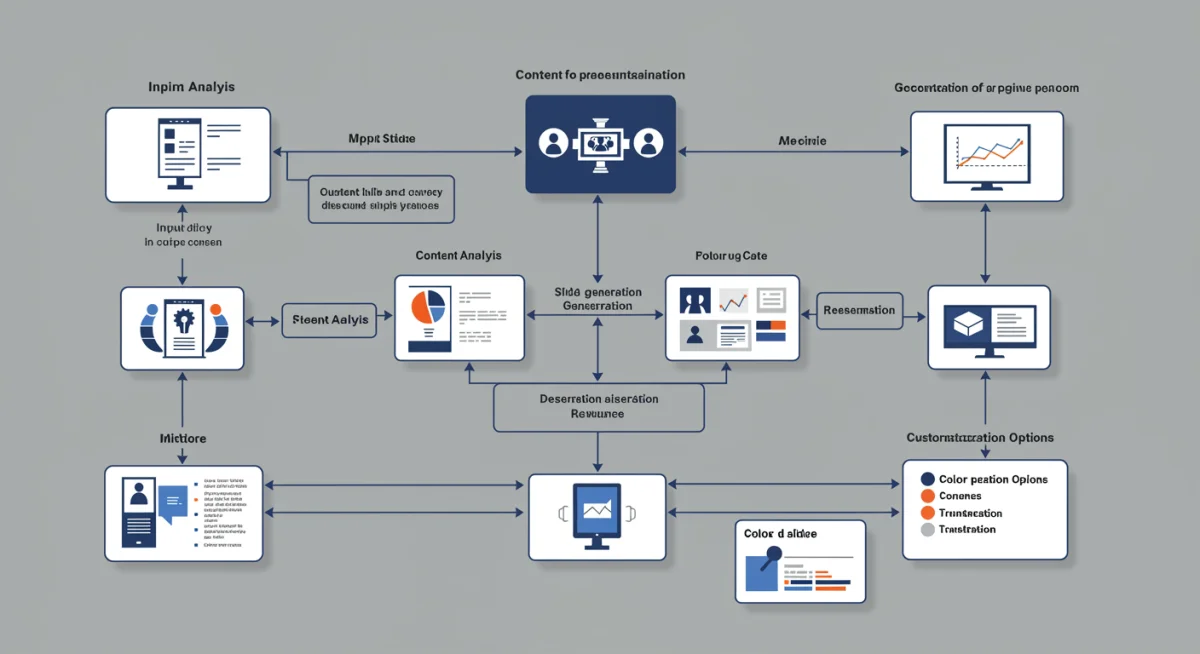
Step 1: Input Your Content (2-3 minutes): Copy and paste your prepared text, outline, or key bullet points into the AI tool. Some tools even allow uploading documents. Be specific about your topic and target audience.
Step 2: AI Generates First Draft (1-2 minutes): The AI will analyze your input and generate an initial set of slides, complete with suggested layouts, images, and text formatting. Review this initial draft for overall structure and content flow.
Step 3: Quick Design Customization (3-4 minutes): Use the AI’s customization options. This might involve selecting a different theme, adjusting the color palette, or swapping out suggested images for more specific ones from the tool’s library. Focus on broad strokes rather than minute details.
Step 4: Review and Refine (1-2 minutes): Do a quick final pass. Check for any glaring errors, ensure readability, and confirm that all key messages are clearly conveyed. Make minor text edits as needed.
During this rapid workflow, resist the urge to over-edit or get bogged down in perfectionism. The goal is efficiency and a strong, presentable output. AI tools are designed to handle the aesthetic heavy lifting, allowing you to focus on the message. Remember, the 10-minute constraint encourages decisive action and trust in the AI’s capabilities.
This structured approach ensures that you leverage the AI’s speed and design intelligence without getting lost in endless customization options. By adhering to these time allocations for each step, you can consistently produce high-quality presentations rapidly, freeing up valuable time for other critical tasks or further content refinement.
Beyond Basic Slides: Advanced AI Features
While the core function of AI presentation tools is to rapidly generate slides, many platforms offer advanced features that extend far beyond basic design. These capabilities can elevate your presentations from mere information delivery to truly immersive and engaging experiences. Exploring these advanced functionalities can significantly enhance the impact and professionalism of your work.
These features often leverage more sophisticated AI algorithms, allowing for deeper content understanding, dynamic visual generation, and even interactive elements. Understanding and utilizing them can set your presentations apart, making them memorable and highly effective in conveying complex ideas or compelling narratives.
Unlocking Deeper Engagement and Customization
Advanced AI features provide opportunities for richer design and more dynamic content. Consider integrating the following to truly revolutionize your presentations:
Data Visualization: AI can transform raw data into visually compelling charts, graphs, and infographics, automatically selecting the best format for your information.
Interactive Elements: Some tools offer the ability to embed quizzes, polls, or clickable elements directly into slides, fostering audience participation.
Voiceover and Narration Generation: AI can generate professional voiceovers for your slides, enhancing accessibility and providing a consistent narration tone.
Content Translation: For international audiences, AI can translate your entire presentation into multiple languages with impressive accuracy.
Dynamic Slide Transitions and Animations: AI can suggest and apply sophisticated transitions and animations that enhance visual flow without being distracting.
Furthermore, advanced AI tools often come with robust analytics features. These can track audience engagement, slide retention, and even emotional responses, providing valuable insights for future presentation improvements. This data-driven feedback loop is invaluable for continuous refinement of your communication strategy.
By delving into these advanced AI capabilities, you move beyond simply creating slides quickly. You begin to craft presentations that are not only efficient to produce but also highly effective in capturing attention, conveying information, and achieving your communication objectives. These features transform the presentation design process into an innovative and powerful experience.
Best Practices for AI-Enhanced Presentations
Leveraging AI for presentation design offers immense benefits, but simply using the tools isn’t enough. To truly excel, it’s crucial to adopt best practices that ensure your AI-generated presentations are not just fast, but also effective, authentic, and truly impactful. These practices blend technological efficiency with human insight and strategic communication principles.
The goal is to harness AI’s power to streamline design while maintaining a strong personal touch and ensuring your message resonates deeply with your audience. This balance is what differentiates a merely good presentation from an exceptional one, regardless of how quickly it was created.
Maximizing Impact and Authenticity
To ensure your AI-enhanced presentations are outstanding, integrate these best practices into your workflow:
Always Review and Refine: While AI is powerful, a human touch is indispensable. Proofread content, check for factual accuracy, and ensure the tone aligns with your personal style.
Personalize When Possible: Don’t just accept AI’s default suggestions. Inject your unique voice, add personal anecdotes, or customize visuals to reflect your brand or personality.
Focus on Clarity and Conciseness: AI can generate a lot of content. Your role is to ensure every word and visual serves a clear purpose, avoiding clutter and ambiguity.
Test on Different Devices: Ensure your presentation looks good and functions correctly on various screens and projectors, as AI-generated layouts can sometimes render differently.
Practice Your Delivery: A well-designed presentation is only half the battle. Practice your delivery to ensure a smooth, confident, and engaging performance that complements your slides.
Consider AI as a powerful assistant, not a replacement for your critical thinking and creative input. Use its suggestions as a starting point, then mold them to fit your specific needs and audience expectations. This approach ensures that the final product is not only efficient but also authentically yours.
By consistently applying these best practices, you elevate your AI-enhanced presentations from mere slide decks to compelling narratives. You leverage technology to save time on mechanics, allowing you to invest more energy into crafting a powerful message and delivering it with confidence and conviction. This strategic use of AI transforms the entire presentation experience for both you and your audience.
The Future of Presentations: AI Integration and Beyond
The current state of AI in presentation design is impressive, but it’s merely the beginning. The future promises even deeper integration and more sophisticated capabilities that will further transform how we create and deliver presentations. Understanding these emerging trends can help you stay ahead of the curve and adapt your skills for what’s next.
We’re moving towards an era where AI won’t just assist in design but will actively participate in content creation, audience analysis, and even real-time adjustments during a live presentation. This evolution will redefine productivity and creativity in communication, making presentations more dynamic and personalized than ever before.
Emerging Trends and Innovations
Several exciting developments are on the horizon for AI in presentation technology:
Predictive Analytics for Audience Engagement: AI could analyze your audience’s demographics and preferences to suggest content and design elements that are most likely to resonate.
Generative AI for Multimedia: Beyond text and basic images, AI will generate custom videos, 3D models, and interactive simulations tailored to your presentation topic.
Real-time Presentation Coaching: AI could provide live feedback on your speaking pace, tone, and body language during practice sessions, helping you refine your delivery.
Seamless Integration with Data Sources: AI tools will automatically pull and update data from spreadsheets, databases, and live feeds, ensuring your presentations are always current.
Adaptive Presentations: Imagine a presentation that adjusts its content and flow in real-time based on audience interaction or questions, creating a truly personalized experience.
The convergence of AI with virtual and augmented reality (VR/AR) is another exciting frontier. Presentations could become fully immersive experiences, allowing audiences to interact with content in a 3D space, leading to deeper understanding and retention. This would fundamentally change the way information is consumed and shared.
As AI continues to evolve, the distinction between a ‘designer’ and a ‘presenter’ may blur, with tools empowering everyone to create compelling narratives. Staying informed about these advancements and continuously experimenting with new AI functionalities will be crucial for anyone looking to maintain a competitive edge and make their presentations truly stand out in the future.
Key Aspect
Brief Description
AI Efficiency
Automates design and content suggestions, drastically reducing creation time to under 10 minutes.
Content Optimization
Pre-structuring content with clear headings and bullet points maximizes AI effectiveness.
Advanced Features
Includes data visualization, interactive elements, and voiceover generation for enhanced impact.
Best Practices
Human review, personalization, and clarity ensure authenticity and maximize presentation effectiveness.
Frequently Asked Questions About AI Presentation Design
How can AI design presentations in under 10 minutes?▼
AI tools achieve this by automating core design tasks. They analyze your input content, suggest relevant layouts, visuals, and text formatting instantly. This eliminates manual design work, allowing you to focus on content and quick refinements, dramatically speeding up the entire creation process.
What kind of input is best for AI presentation generators?▼
For optimal results, provide structured content like outlines, bullet points, and clear headings. The more organized and concise your input, the better the AI can understand your message and generate accurate, relevant slides. Including keywords and audience context also helps significantly.
Are AI-designed presentations customizable?▼
Absolutely. While AI provides an excellent starting point, most tools offer extensive customization options. You can easily adjust themes, colors, fonts, images, and layouts to match your brand or personal style. The AI handles the initial heavy lifting, leaving you to fine-tune the details.
Can AI help with data visualization in presentations?▼
Yes, many advanced AI presentation tools excel at data visualization. They can take raw data and automatically generate appropriate charts, graphs, and infographics, ensuring your data is presented clearly and compellingly. This transforms complex numbers into easily digestible visual information.
What are the future trends for AI in presentation design?▼
Future trends include predictive analytics for audience engagement, generative AI for multimedia content like custom videos, real-time presentation coaching, seamless integration with live data sources, and adaptive presentations that adjust content based on audience interaction. These innovations promise even more dynamic and personalized experiences.
Conclusion
The ability to design compelling presentations in under 10 minutes using AI is no longer a futuristic concept but a present-day reality that is fundamentally changing how we approach communication. From automating mundane design tasks to offering advanced features like data visualization and interactive elements, AI tools are empowering individuals and organizations to create high-quality, impactful slides with unprecedented speed and efficiency. By embracing these technologies and adhering to best practices—such as optimizing content input, personalizing designs, and conducting thorough reviews—users can harness AI’s full potential. The future of presentations is undoubtedly intertwined with AI, promising even more sophisticated and integrated solutions that will continue to revolutionize our ability to inform, persuade, and engage audiences effectively.