AI Tools for Content Creation: 40% Output Boost in 3 Months
AI tools for content creation are revolutionizing how businesses and individuals produce digital assets, offering a proven pathway to significantly boost output and quality within a short timeframe.
By: adminwp2 on April 17, 2026
Advertisements
AI tools for content creation are revolutionizing how businesses and individuals produce digital assets, offering a proven pathway to significantly boost output and quality within a short timeframe.
Are you struggling to keep up with the ever-increasing demand for fresh, engaging content? The advent of AI Tools for Content Creation: Increase Output by 40% in 3 Months offers a transformative solution, promising not just efficiency but also a significant boost in your content production capabilities. This isn’t just about automation; it’s about intelligent assistance that redefines the content landscape.
Understanding the AI Revolution in Content Creation
The digital age has ushered in an insatiable demand for content, pushing creators and marketers to their limits. Traditional content generation methods, while valuable, often struggle to scale effectively. This is where artificial intelligence steps in, offering a paradigm shift in how we approach content creation. AI tools are not merely spell-checkers; they are sophisticated engines capable of generating ideas, drafting text, optimizing for SEO, and even producing multimedia elements.
Embracing AI in content creation means moving beyond manual limitations. It allows for the rapid generation of diverse content forms, from blog posts and social media updates to ad copy and video scripts. The core benefit lies in its ability to handle repetitive tasks, freeing up human creators to focus on strategic thinking, creative direction, and quality refinement.
The Evolution of AI in Writing
Early AI writing tools were rudimentary, often producing stiff or nonsensical text. However, advancements in natural language processing (NLP) and machine learning have led to highly sophisticated models that can mimic human writing styles with remarkable accuracy and coherence. These tools learn from vast datasets, enabling them to understand context, tone, and audience nuances.
Generative AI: Capable of creating original text from prompts.
Optimization AI: Tools that enhance existing content for SEO, readability, and engagement.
Research AI: Automates data collection and synthesis for content ideation.
The continuous improvement of these technologies means that AI is no longer a futuristic concept but a practical, everyday tool for content professionals. It’s about augmenting human capabilities, not replacing them, allowing for a more efficient and creative workflow.
Understanding this evolution is crucial for any content creator looking to leverage AI effectively. The goal is to integrate these tools seamlessly into existing processes, creating a synergy between human creativity and artificial intelligence efficiency. This integration is key to unlocking the promised 40% increase in output.
Strategic Implementation: Integrating AI into Your Content Workflow
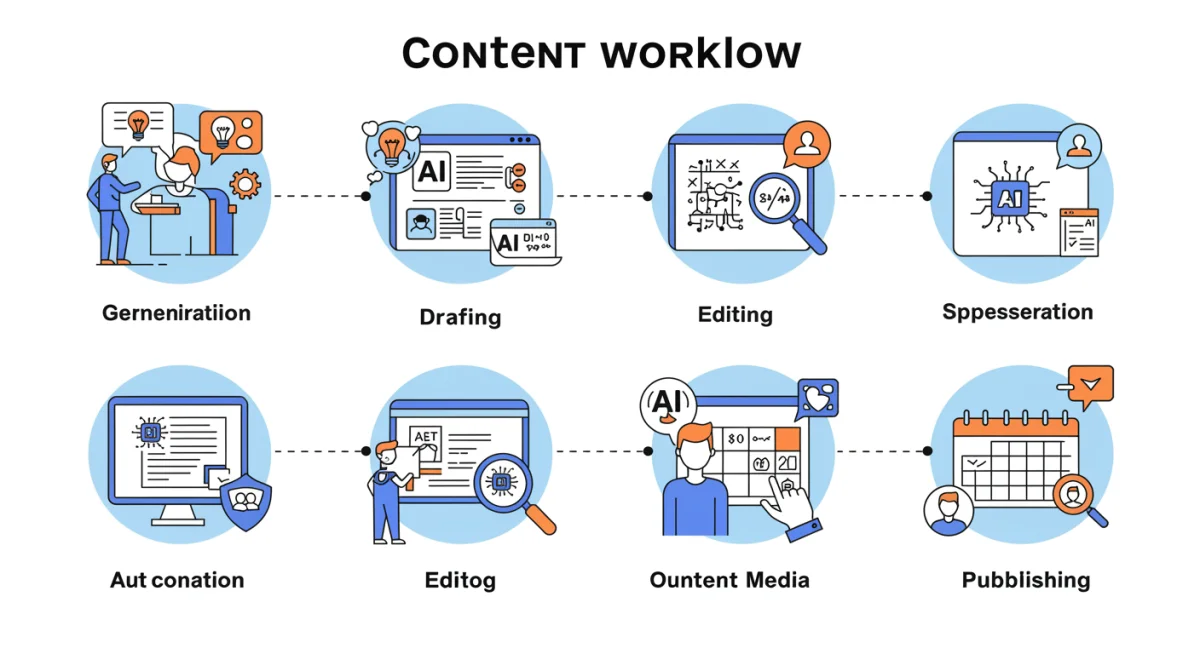
Achieving a 40% increase in content output within three months isn’t about haphazardly adopting every AI tool available. It requires a strategic approach to integration, carefully mapping AI capabilities to your existing content workflow. The goal is to identify bottlenecks where AI can provide the most significant leverage, thereby maximizing efficiency and creative potential.
Start by auditing your current content production process. Pinpoint areas that consume disproportionate amounts of time or resources, such as initial brainstorming, drafting first versions, or optimizing for various platforms. These are prime candidates for AI intervention, as even small efficiencies in these stages can lead to substantial overall gains.
The integration process should be iterative, beginning with pilot projects to test the effectiveness of specific AI tools. This allows for adjustments and fine-tuning, ensuring that the chosen AI solutions align perfectly with your team’s needs and objectives.
Identifying Key Workflow Bottlenecks
Many content teams face similar challenges in their workflow. Recognizing these common pain points is the first step toward effective AI integration. By addressing these areas with targeted AI solutions, you can unlock significant productivity improvements.
Idea Generation: AI can rapidly generate diverse topic ideas and outlines.
First Draft Creation: AI can produce initial drafts, saving significant writing time.
SEO Optimization: AI tools can analyze keywords and optimize content for search engines.
Content Repurposing: AI can adapt existing content for different formats and platforms.
By strategically deploying AI at these critical junctures, content teams can move faster, produce more, and maintain higher quality standards. This intelligent application of AI is what distinguishes successful integration from mere experimentation.
Furthermore, training your team on how to effectively use these AI tools is paramount. Understanding the nuances of prompt engineering and how to refine AI-generated content ensures that the output meets your brand’s voice and quality standards. This human-AI collaboration is the cornerstone of boosted productivity.
Top AI Tools for Boosting Content Creation Efficiency
The market for AI content creation tools is rapidly expanding, offering a diverse array of solutions for every stage of the content lifecycle. Choosing the right tools is critical for achieving your 40% output increase. These tools range from sophisticated language models that generate human-like text to specialized applications for image creation, video editing, and SEO optimization.
Focus on tools that offer robust features, intuitive interfaces, and integration capabilities with your existing software ecosystem. Prioritize solutions that specifically address your identified workflow bottlenecks, ensuring that each investment yields measurable improvements in efficiency and quality.
Essential AI Writing Assistants
AI writing assistants are at the forefront of content creation, capable of generating everything from short social media captions to long-form articles. These tools are invaluable for overcoming writer’s block and accelerating the drafting process.
Generative AI Platforms: Tools like ChatGPT, Jasper, and Copy.ai excel at generating text based on user prompts. They can create articles, marketing copy, and even creative stories.
Grammar and Style Checkers: Platforms such as Grammarly and ProWritingAid use AI to refine grammar, spelling, and writing style, ensuring polished final content.
Paraphrasing Tools: AI-powered rephrasing tools can help create variations of existing text, useful for avoiding plagiarism and generating fresh perspectives.
When selecting an AI writing assistant, consider its ability to maintain brand voice, integrate with your content management system, and learn from feedback. The more sophisticated the AI, the more tailored and effective its output will be.
AI Tools for Visuals and Multimedia
Content creation extends beyond text. Visuals and multimedia are crucial for engaging audiences, and AI tools are revolutionizing this domain as well. From generating unique images to automating video editing, these tools significantly reduce production time.
AI Image Generators: Midjourney, DALL-E, and Stable Diffusion can create stunning images from text descriptions, providing unique visuals without stock photo limitations.
AI Video Editors: Tools like Descript and Synthesia use AI to streamline video editing, generate voice-overs, and even create AI avatars for presentations.
AI Audio Tools: AI can generate background music, create realistic voice-overs, and transcribe audio, saving hours in production.
Integrating these visual and multimedia AI tools can dramatically enhance the aesthetic appeal and diversity of your content, making it more engaging and shareable across various platforms. The ability to quickly produce high-quality visual assets is a game-changer for content teams.
Measuring Success: Tracking Your 40% Output Increase
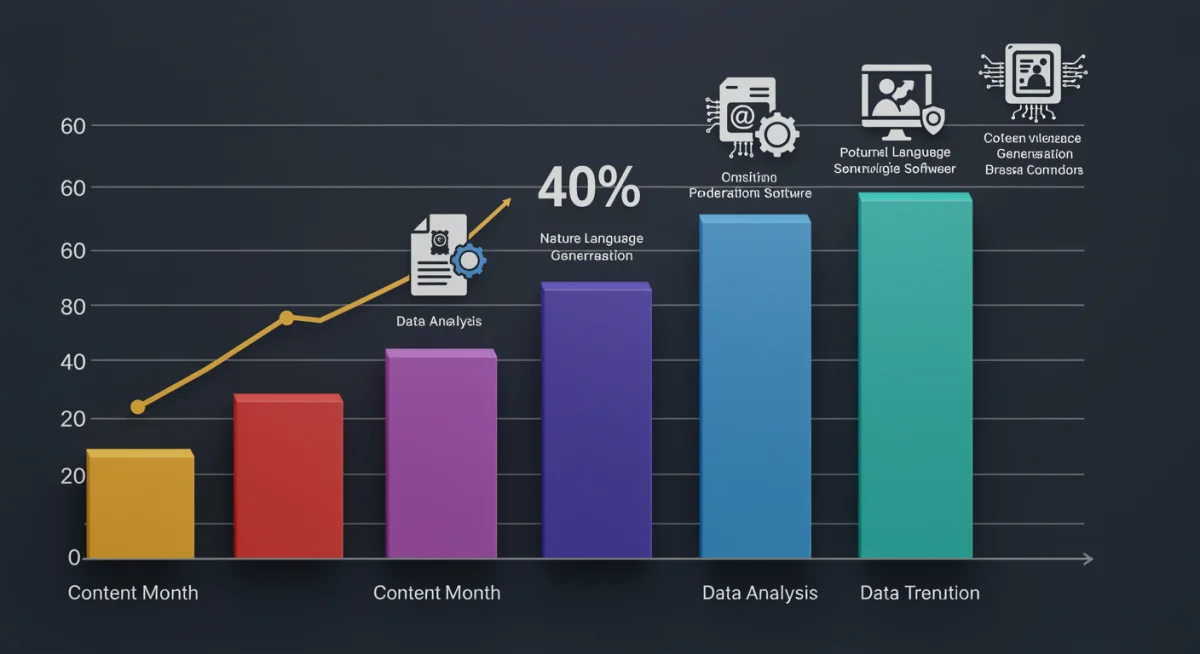
To truly understand the impact of integrating AI Tools for Content Creation: Increase Output by 40% in 3 Months, establishing clear metrics and a robust tracking system is essential. Simply producing more content isn’t enough; you need to ensure that the increased volume translates into tangible business results. This involves monitoring not only quantity but also quality, engagement, and conversion rates.
Before implementing AI, establish a baseline for your current content output and performance. This baseline will serve as the benchmark against which you measure progress. Define what constitutes a ‘piece of content’ for your team, whether it’s a blog post, a social media update, or a video, to ensure consistent measurement.
Regularly review your metrics, perhaps weekly or bi-weekly, to identify trends and make necessary adjustments to your AI strategy. This continuous feedback loop is vital for optimizing AI tool usage and ensuring you stay on track to achieve your 40% increase.
Key Performance Indicators (KPIs) for Content Output
Measuring content output goes beyond just counting pieces. It involves understanding the efficiency of production and the impact of the content. By focusing on specific KPIs, you can gain a holistic view of your progress.
Volume of Content Produced: Track the number of articles, social posts, videos, etc., generated per week/month.
Time to Production: Measure the average time taken from idea inception to publication.
Content Quality Scores: Implement a system for rating content quality, perhaps through internal reviews or audience feedback.
Engagement Metrics: Monitor likes, shares, comments, and time on page to gauge audience reception.
These KPIs provide a clear picture of how AI tools are influencing your content production pipeline. A consistent increase in volume coupled with maintained or improved quality indicates successful AI integration.
Furthermore, consider the broader impact on your team. Are human creators spending less time on tedious tasks and more on strategic planning and creative endeavors? This qualitative metric, while harder to quantify, is equally important for long-term success and team satisfaction.
Overcoming Challenges and Ethical Considerations
While the promise of increasing content output by 40% with AI tools is compelling, it’s crucial to acknowledge and address the challenges and ethical considerations that come with this powerful technology. Navigating these complexities responsibly ensures that AI remains a beneficial tool rather than a source of unforeseen problems.
One primary challenge is maintaining content authenticity and originality. AI-generated content, if not properly reviewed and edited, can sometimes lack a unique voice or inadvertently reproduce existing information. Human oversight is indispensable to ensure that the content reflects your brand’s values and offers genuine value to your audience.
Ensuring Quality and Originality
The efficiency of AI should never come at the expense of quality or originality. Establishing clear guidelines for AI use and implementing rigorous review processes are vital for maintaining high standards.
Human Oversight: Always have human editors review and refine AI-generated content for accuracy, tone, and brand voice.
Plagiarism Checks: Utilize plagiarism detection tools to ensure AI-generated content is original and free from unintentional duplication.
Fact-Checking: AI models can sometimes generate inaccurate information; thorough fact-checking is essential, especially for sensitive topics.
By integrating these checks and balances, you can leverage AI’s speed without compromising the integrity or quality of your content. The goal is a symbiotic relationship where AI accelerates production, and human expertise ensures excellence.
Addressing Ethical Dilemmas in AI Content
The ethical implications of AI in content creation are profound and require careful consideration. Issues such as bias in AI algorithms, data privacy, and the potential for misinformation are critical concerns that must be proactively addressed.
Bias Detection: Be aware that AI models can inherit biases from their training data; actively work to identify and mitigate these in your content.
Transparency: Consider disclosing when content is AI-assisted, fostering trust with your audience.
Responsible Use: Avoid using AI to spread misinformation, generate harmful content, or infringe on intellectual property rights.
Adhering to ethical guidelines and fostering a culture of responsible AI use within your team is not just good practice; it’s essential for maintaining credibility and trust in the digital landscape. These considerations ensure that the pursuit of increased output aligns with broader ethical responsibilities.
Future Trends: What’s Next for AI in Content Creation?
The landscape of AI in content creation is continuously evolving, with new advancements emerging at a rapid pace. Staying abreast of these future trends is crucial for any content professional looking to maintain a competitive edge and continue leveraging AI Tools for Content Creation: Increase Output by 40% in 3 Months and beyond. The trajectory points towards more personalized, interactive, and autonomous AI systems.
Expect AI tools to become even more sophisticated, capable of understanding complex nuances, generating highly specialized content, and seamlessly integrating across diverse platforms. The future will likely see AI moving from assistive roles to more generative and strategic functions, requiring human creators to adapt and evolve their skill sets.
Hyper-Personalization and Adaptive Content
One of the most exciting future trends is the ability of AI to create hyper-personalized content tailored to individual user preferences and behaviors. This goes beyond basic segmentation, offering truly unique content experiences.
Dynamic Content Generation: AI could generate content in real-time that adapts to user interactions and profiles.
Predictive Analytics: AI will further refine its ability to predict content trends and audience interests, guiding creation strategies.
Multimodal Content Creation: Expect AI to seamlessly generate text, images, audio, and video as a single, integrated output.
This level of personalization promises to revolutionize audience engagement, making content far more relevant and impactful. Content creators will work alongside AI to craft these intricate and adaptive experiences.
Autonomous AI and Human-AI Collaboration
The future will also bring more autonomous AI systems that can manage entire content campaigns from ideation to distribution, requiring less direct human intervention. However, human creativity and strategic oversight will remain paramount.
Self-Optimizing Content: AI tools that continuously analyze performance and automatically adjust content for better results.
Advanced Prompt Engineering: The skill of crafting effective prompts for AI will become even more critical, distinguishing expert users.
Creative AI Partnerships: Humans and AI will collaborate on a deeper level, with AI handling technical execution and humans providing creative vision.
The shift towards more autonomous AI means content creators will need to become adept at managing and guiding AI, focusing on high-level strategy and creative direction. This evolution promises to unlock unprecedented levels of productivity and innovation in content creation.
Maximizing ROI: Beyond Just Increased Output
While the goal of increasing content output by 40% in three months is a significant achievement, the ultimate success of integrating AI Tools for Content Creation: Increase Output by 40% in 3 Months lies in maximizing your return on investment (ROI). This means looking beyond sheer volume to the broader impact on your business objectives, including brand visibility, customer engagement, and ultimately, revenue generation.
An increase in output is valuable only if it contributes to your strategic goals. Therefore, it’s crucial to connect your AI-driven content efforts to measurable business outcomes. This involves not only tracking content performance metrics but also analyzing how these metrics correlate with key business indicators.
Connecting Content to Business Outcomes
To truly maximize ROI, you must establish a clear line of sight between your AI-enhanced content production and your overarching business objectives. This requires a comprehensive analytics strategy that goes beyond basic engagement metrics.
Lead Generation: Track how AI-generated content contributes to new leads and customer acquisition.
Conversion Rates: Analyze the conversion rates of content pieces produced with AI assistance.
Brand Authority: Monitor improvements in search rankings, organic traffic, and brand mentions.
Cost Savings: Quantify the reduction in time and resources spent on content creation due to AI.
By meticulously tracking these connections, you can demonstrate the tangible value that AI tools bring to your organization. This data-driven approach allows for continuous optimization and refinement of your AI strategy, ensuring that every piece of content works harder for your business.
Moreover, consider the long-term benefits. An efficient content pipeline, powered by AI, allows your team to experiment more, innovate faster, and respond to market changes with greater agility. This strategic advantage can lead to sustained growth and a stronger competitive position.
Key Point
Brief Description
AI Integration Strategy
Systematically embed AI tools into content workflows to identify and resolve bottlenecks, ensuring maximum efficiency.
Diverse AI Toolset
Utilize various AI writing, visual, and multimedia tools to enhance all aspects of content creation, not just text.
Performance Tracking
Implement KPIs to measure content volume, quality, and engagement, verifying the 40% output increase and overall impact.
Ethical AI Use
Prioritize human oversight, fact-checking, and ethical considerations to maintain content originality and trustworthiness.
Frequently Asked Questions About AI Content Creation
Can AI really increase content output by 40% in three months?▼
Yes, with strategic implementation and proper training, AI tools can significantly accelerate content production. By automating repetitive tasks like drafting and optimization, teams can redirect efforts, leading to a substantial increase in output within a short period.
What types of AI tools are most effective for content creation?▼
Generative AI platforms for text (e.g., ChatGPT, Jasper), AI image generators (e.g., Midjourney, DALL-E), and AI-powered SEO optimization tools are highly effective. Tools that streamline research and repurposing also contribute significantly to efficiency.
How do I maintain content quality when using AI tools?▼
Maintaining quality requires robust human oversight. Always review and edit AI-generated content for accuracy, brand voice, and originality. Implement strong fact-checking and plagiarism detection processes to ensure high standards are met.
Are there ethical concerns with using AI for content creation?▼
Yes, ethical concerns include potential biases in AI output, transparency with audiences, and responsible use to avoid misinformation. It’s crucial to address these by promoting ethical guidelines and thorough human review of all AI-assisted content.
What training is needed for a team to effectively use AI content tools?▼
Training should cover understanding AI capabilities, effective prompt engineering, refining AI-generated content, and ethical guidelines. Continuous learning and adaptation to new tools are also vital for maximizing AI’s potential in content creation workflows.
Conclusion
The journey to increasing content output by 40% in just three months with AI tools is not merely an aspiration; it is a tangible reality for those willing to embrace innovation. By strategically integrating AI into your content workflow, leveraging the diverse array of available tools, rigorously tracking your progress, and navigating the associated challenges with ethical consideration, content creators can unlock unprecedented levels of productivity and creativity. The future of content creation is a collaborative landscape where human ingenuity is amplified by artificial intelligence, leading to more engaging, effective, and abundant content than ever before. Embrace this transformation, and watch your content strategy soar.